Manual vs Electric: which toothbrush is best?
If you want long-term optimal oral health, the fundamentals of excellent tooth brushing cannot be overstated. Establishing and maintaining healthy teeth and gums requires consistent daily flossing and brushing, as well as regular visits to the dentist and dental hygienist of course. In support of a good daily oral health regime, it’s also important to keep an eye on your diet, limiting sugary food and drinks, whilst upping your intake of healthy fruit and vegetables.
When it comes to choosing the right brush for you and your teeth, the obvious choice is between a traditional manual brush and one of an extensive range of electric versions. Naturally there are pros and cons of both, and whatever you decide, the main thing to remember is to use it in the correct way for getting the best possible results.
Manual vs Electric: cost comparison
From the standpoint of price, the manual toothbrush wins hands down because there really is no such thing as a ‘top of the range’ brush that will cost a fortune! Electric toothbrushes however come in a dazzling array of styles, functionality and cost which makes the decision-making process more complex.
Manual vs Electric: Convenience
The great thing about a manual toothbrush is that you can easily take it anywhere with you on a day out or a trip away and there’s no need to carry an electric charger with you. It’s so annoying when you’re away from home with your electric toothbrush and it runs out of charge! So from the point of view of convenience, the traditional toothbrush scores higher than the electric.
Manual vs electric: brushing technique
The main difference between the manual and electric toothbrush is that with the manual brush you have to do the work and your results will be wholly dependent on how good your technique is. With the electric toothbrush it is more about letting the brush do the work so long as you direct it to all the right places!
For manual toothbrushes, we usually recommend a softer bristle toothbrush as the most comfortable and safest option. Depending on how vigorously you brush your teeth, softer bristles are easier on the gums, whereas hard bristle brushes can actually damage the gums, root surface and tooth enamel, and we certainly don’t want that!
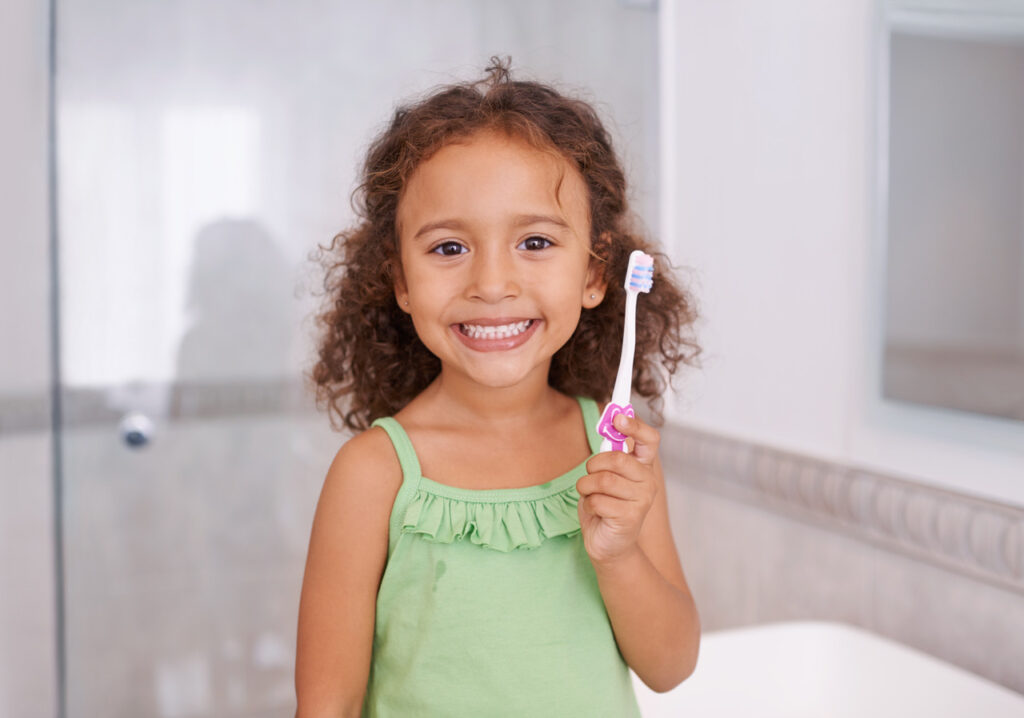
For young children who are just beginning to learn to brush their own teeth, it is probably easier to start with a small manual brush, so they can more easily learn good brushing skills.
Manual vs electric: performance evaluation
Many people assume the electric toothbrush gives you the best results, but in reality, if you have a really good brushing technique, you can get excellent cleaning results with a traditional brush. But the key difference is that you must be super diligent with your brushing technique and this is different to what happens if you use an electric toothbrush. The electric brush does all the hard work and there is less room for human error, which is something to consider when choosing a brush for children, especially for slightly older children who might find the electric option more fun and exciting.
Similarly, an electric toothbrush does wonders for those who may have conditions such as arthritis, which limits their manual dexterity. An electric toothbrush does all the work for you, with power rotations that help loosen plaque with ease and comfort.
Final thoughts: what's the best type of toothbrush?
So just to sum up, we believe that both types of toothbrushes can be just as effective as the other in keeping your teeth clean and healthy, provided that you are using the right technique. Remember too, that the key to excellent oral health is brushing your teeth twice a day for the recommended 2 minutes and making sure to floss properly every single day. And one last thing, it’s important to keep an eye on the wear and tear on your brush head – we usually recommend replacing your toothbrush roughly every 3 months.
Wishing you all happy and healthy smiles for many years to come!